LW

Archive for November, 2009

The gentle fluttering and dancing of daffodils inspired Wordsworth in 1804, yet there we were on August 28 at Viharamahadevi Park in Colombo staring at the lazy flapping of the colourful Orchids, wondering why someone couldn’t immortalize its beauty just as well.

It was the 75th anniversary Orchid show and horticultural extravaganza presented by the Orchid Circle of Ceylon. Contestants from far and wide in Sri Lanka showcased their prized orchids surrounded by miniature water ways and landscapes.

President of OCC, Sushila Fernando, the lady behind the show says that Orchid Cultivation, at the very beginning was a scoring point among the rich and the affluent. “Orchids have been cultivated in Europe and USA for over 200 years, first by the wealthy and then by the enthusiasts. The same pattern followed in Sri Lanka with the wealthy importing the plant at the beginning which was much later taken up by the general public,” said Ms. Fernando. Interestingly, she adds that the Orchid Circle was the brain child of the Minister of Agriculture in 1934, D.S. Senanayake.

“So much of care has to be exercised in order to cultivate the plant professionally, those who exhibit these beautiful orchids today has at least got ready from a year before. It has to be treated with care, with the right amount of fertilizer and medicine.”

The main challenges to be noted are the rain, the night time and the proper medicine, she said. “It has to be covered properly, and especially since this time of the year is wet extra care has to be taken to protect these flowers from excessive water,” Ms. Fernando said. And at nightime, the planters have to take out their torches and go and pick out the Hangolla’s that eat the leaves of the beautiful plant. “And then there is the medicine part. The shop might give the wrong one and then more effort has to be taken to revive it and so on.”

However, orchid cultivation has, today, paved the way for small scale planters to sell their products for profit.

The second oldest horticultural society in the world, Orchid Circle of Ceylon also extended their support to the Seva-Vanitha group by creating a tie between the two organizations and offering to teach the ladies there, how to grow and care for the plants at their anniversary celebrations.

Earmarking 75 years of existence, the Philatelic Bureau and the Postal Department issued two stamps of Rs.15 and Rs.40 depicting the Sri Lankan endemic species of the plant, Angraceum zeylanicum and Bulbophyllum macraii as well. And of course the bulletin, ‘Orchidologia Zeylanica’ was also launched at the event.

[by Lakmini Wijemanne]

As mentioned in the previously published articles of the Galle Fort (GF), there are many interesting places to learn about and marvel in the Fort This month, we take you on a very interesting (hopefully enlightening) journey, visiting a few of the more prominent places of interest. Should you decide to visit the GF in the future, these places are a must in your travel schedule, for they teach us more about the purpose, people advancement in many areas, and the far-reaching minds of the people in those days.

Among the principal places of interest, the following are extra noteworthy as these buildings are very much intact in their original forms, although some of these buildings are now being used as administrative offices.

The Warehouse Building

When the Galle Fort was built, the Dutch designers drew into it 14 bastions, placed at regular intervals around the Fort. These bastions had been well-armed as well as well-guarded. Each of the bastions were independently named and each bastion had fulfilled their individual duties. The area between the Sun Bastion and the Black Fort is a long stretch of land which has been utilized as a huge long warehouse which belonged to the old Dutch East India company, to store the merchandise belonging to the company.

It also served as part of the rampart wall too. Owing to the different material used in different parts of this long building, it is believed that, although it was started to build during the Dutch period, it was completed by the British. A few blocks of stones fixed to the walls upstairs were found with 1671, 1672 and 1676 inscribed on them, and this had led the authorities to believe that the building of that particular section must have taken place during the 1670’s. The main entrance to the GF also had been through this warehouse building.

The old emblem belonging to the Dutch East India Company – V.O.C. had been sculpted and affixed over this entranceway, although, it is believed that when the British were occupying the premises, they removed the VOC emblem and fixed it on to the inside of the wall, while on the outside wall, British Emblem is now fixed.

A rough sketch of the original floor plan had been found in the diary of the Governor Isaac Augustine Rumpf (1716-23). It was believed that there must have been a prayer church hall also in the warehouse building since the gable of the warehouse matches the Dutch Reform Church gable, opposite the road.

From time to time, this vast warehouse building had been used to fulfill many needs. For the first time, the first Police Courts and the Police Post was started in the Fort by the British. The Gymkhana Club and various government offices had been housed in the warehouse building. Presently, this long majestic building houses a wonderful maritime museum complex with the collaborating of the Department of museum with the Central Cultural Fund. Apart from the beautiful and educational exhibits, it also houses a clean restaurant, an information centre and clean wash room facilities as well.

The Black Fort

Why it was called the Black Fort in those days, no one really knows, although, there are three different theories as to its name. One such theory was that, the forgery had been placed there. Due to the constant emission of black smoke from the forgery, the walls there became black. Another theory was that it was used as a gun-point and the constant, gun smoke made the walls black, while the third theory was that, there had been a big African community housed in this section of the Fort, and thus it was named the Black Fort.

Anyhow, the Portugese had used it as their most concentrated area of the Fort. During the Dutch and the more recent, British eras, this area had been used as the Central Military base completed with its barracks, prison cells and an officers’ mess. During the last years of the British occupation, the Galle Fort Police post was housed at the Black Fort and now, it is the precedence area of the Chief of Police, Galle Fort.

Queens House

There is reason to believe that it was built in the year 1683. This building is on the same road as the warehouse building and opposite of it. Originally, the building had been used as the Dutch Governers official quarters. Since the location of it was very prominent, the front portion was re-modelled as the Queens’ House while the back portion retained its Dutch architecture. The late years of the British rule, the house was owned and occupied by Walker Sons Ltd., and now it is the property of the Amangalle Hotel.

Clock Tower (1883-1903)

The old majestic clock tower is built on the Moon Bastion. The Portuguese referred to it as the “Conceycao” and the Dutch called it the “Middlepunt’’. It was officially called the Moon Bastian in 1667. By the year 1760, nineteen cannons had been in operations at the Moon Bastion. The legend of the clock tower goes thus!

A colonial surgeon by the name of Peter Daniel Anthonis had lived in the Fort, who was the only representative of the London Medical Council. He hailed from an Old English family. Samson Abrew Rajapakse was a well known Mudliyar in Kosgoda who was suffering from an ailment for a long time. Dr. Peter Daniel Anthonis had happened to befriended the Mudliyar and treated and cured him of his painful ailment. To remember the good doctor’s service to mankind, the Mudiyar Commissioned the Clock tower to be built in the Fort. All equipment to build the clock had been imported from a company called John Morrisons & Co. in the UK. It is believed, that even the stone blocks used in the building of the tower had been brought down, since they all look custom-built.

After 40 years of a non-working period, the clock started working since of late, as testimony to the engineering skills of the engineers attached to the Sri Lanka Navy Engineering Squad. With no documents or prints whatsoever to guide them, purely by educating themselves of the remaining parts of the huge clock, these beginners had managed to put together the ancient clock to working order again. Missing pieces of the clock had been custom-made to match the existing huge clock and its ancient mechanism. After many months of work, now, the Galle Fort is the proud owner of a clock tower with a perfectly working clock able to tell the time to its citizens.

The Dutch Hospital

It is believed that the hospital had been built before the year 1726 although an exact date or a year had yet not been found in the various records. These records had shown that the building now being used as the “Kachcheri” housing many government offices, was an original coin manufacturing factory (minting factory) for the Portugese, for their commercial trade in the region. Later, with the Dutch occupation, the building had been used as a hospital complex. During the Dutch period, the records had shown that only the officials of the army and the Dutch people living in the Fort had been allowed to be treated there. A senior medical surgeon, an assistant and trainee had been working the hospital with some helpers as the records available shows. They each had been paid 90, 60 and 30 guilders (Dutch Currency) as their monthly wages. Patients had been supplied with food, clothing as well as mattresses and the charges for the duration of the hospital stay had been deducted from their wages.

The hospital was more developed during the British occupation and it had then become the hospital complex. At that time, there had been altogether four hospitals operating within the Fort for the soldiers, officials, black people and the moors. The hospital complex had comprised of separate quarters, wards, married quarters and stores, etc. The rear section of the building had been used as a military quarters and the front portion had been the hospital proper. These information or conclusions had been arrived depending on the information gleaned from a map found in the records, drawn in 1850’s where an infirmary and barracks section had clearly been marked. The hospital buildings are spread over an area of 60 perches.

Excavations done in the area in the course of work had clearly revealed that different sections had been originally built by the Dutch and some others had later been added-on by the British. The Dutch architectural style mainly used heavy timber aspects and whatever locally found material while the British were more sophisticated in using iron bars, bricks, concrete slabs and big arches.

November 17, 2009 | No comments | Arts

Subtlety Distinctive!

We would like you to take a look at an artist that is different in his style of expression. Shehan De Alwis calls himself an expressionist as he is more of a thinker than an artist. If you were fortunate to have seen his work, it could make you think differently about life. The works of art were subtle, simple yet deep and when you actually look into these works you feel a certain mystery and a ray of hope too.

Shehan in his invitation revealed, “living in a country filled with so much of artistic talent I cannot help but feel like a little dribble in an ocean” which I thought was clear in most of the work that he had created. He will continue with his work and it would definitely be different as you could take time off and think about life and all that entails it. An exhibition with a true difference!

The global school partnership programme organized by the British Council Colombo aims to create young peoples awareness on global issues of creating peace and harmony among all communities with the participation of school teachers. This programme which has 147 partnership schools in different regions of Sri Lanka such as Colombo, Kandy, Galle, Matara, Hambantota, Negambo and Kegalle is administered by the British Council and funded by the department for International Development Ministry in UK.The recently held teacher conference in August 2009 had a special focus on peace, conflict, social Justice and equity has set an example of providing professional development for participants in an enjoyable and innovative concept.

The number of participants in over 80 secondary level teachers from Department of Global School Partnership around the island. The participants gained awareness about collaborative projects on history and civics within the school curriculum, and teachers were taught to develop and manage projects creatively and effectively. Mrs. Sumedha Jayaweera member of the panel of International Schools stated that the conference consisted of activities and workshops along the themes of social Justice, peace and conflict. The agenda focused in helping teachers to identify global issues such as poverty, fair trade etc. and ways of incorporating these issues into curriculum based collaborative projects. There was a high level of involvement from the local Department of Global School Partnership teachers who co-facilitated the sessions together with external resource person from the Attorney Generals Department and the Asian Development Bank.

The project management session delivered by two Sri Lankan International Climate Champions Rochelle Vandort & Ashrifa Ali (who were trained on project management in UK and India) was customized to suit dissemination strategy.A forum theatre group who had been trained by the British Council did a drama on peace and conflict. It had a story which touched the hearts of the participants. There was a competitive environment at the conference. The attendees were divided into 4 colour groups and there were group poster and skit competitions. These were organized mainly with an aim of motivating the teachers and to promote more networking among them. The teachers were empowered with tools, resources and knowledge that would enable them to engage in History and Civic projects within their schools and broaden the global horizons of their students. The event concluded with award presentation ceremony which was organized by the teachers. The Country Exams Manager British Council Mr.Kishore Roy was the Chief Guest for this event.

November 17, 2009 | No comments | Specials

Sri Lanka is ready!

Sri Lanka is ready and well equipped to step in to the showground of International Design. The legacy that is Sri Lankan art and craft is wise with its advancement over two millennia and rich with the diversity of its multi-ethnic society. This thriving art heritage provides inspiration to a generation of young designers that the country has invested on educating. The island having established itself as a consistent supplier of superbly manufactured garments at competitive prices, is especially proud of its position in ethical and conscientious manufacturing; The ‘Garments without guilt’ campaign is a concept of the Sri Lankan apparel manufacturers who take pride in the morality of their products and the integrity of their trade.

With its heritage worthy to inspire the imminent creative talent and its distinguished manufacturing power Sri Lanka is ready to launch its International Design movement. Sri Lanka Design Festival 2009 (SLDF) was designed and organized by the Academy of Design with the objectives of exemplifying and gaining international acknowledgment for Sri Lankan art and design.

SLDF provides a blend of artistic, principled and imaginative fashion shows, conferences, design exhibitions and workshops. Programmed for 27th November till the 5th December 2009 SLDF guarantees to be an experience of remarkable art and design, all based on the fascinating craft heritage of Sri Lanka and its prevailing manufacturing industry. SLDF is both a cultural and a commercial event which is supported by the international design industry, top businesses and the Sri Lankan Government and aims to connect Sri Lanka’s creative culture with a specifically invited global audience.

Key opinion leaders, designers and buyers from the international world of fashion and Design will take part in SLDF and the Fashion Shows will also platform international designers who are designing collections based on Sri Lankan textiles and crafts. Sri Lanka Design Festival 2009 will particularly focus on the fashion manufacturing industry of Sri Lanka which manufactures for some of the best in the world, underlining its advancement from a manufacturing industry to a knowledge-based creative trade founded on principled and sustainable practices. Ethical fashion and design- a perception that the present world is swiftly turning towards- is a notion that Sri Lanka has already implemented and invested on.

While the year 2009 has been particularly designated for the promulgation of Fashion Design, Sri Lanka Design Festival would also give distinction to other design sectors such as Crafts, Graphic Design, Interior design and Jewellery Design in order to create a comprehensive depiction of Sri Lankan design. The British Council, Goethe Institute, Barefoot, University of Moratuwa, National craft council, National design centre and National Apprentice & Industrial Training Authority (NAITA) are also organizing a series of events, exhibitions and workshops in collaboration with Sri Lanka Design Festival.

The sequence of events have been pieced to provide the local designers and industries to drive their designs and their manufacturing products to the world vista and to represent themselves to many design leaders who would educate and hopefully be envoys of Sri Lankan design and manufacturing proficiency to the world. SLDF incorporates aims for global recognition and opportunities to further establish the creative industry and creative talent of Sri Lanka.
For further information: log on to www.srilankadesignfestival.com

[by Cheranka Mendis]

Positioned amidst the constant buzz of whizzing traffic of Rajagiriya is a place of subtle serenity intermingled with a hint of chick comfort and cozy warmth. A place to stop at to catch your breath, slow down your thoughts and enjoy a refreshing cup of iced tea. From the outside you wouldn’t know what the restaurant is all about. It looks like a Chinese restaurant, or might be even be one of Prima meat outlets and of course added to the confusion, the logo looks a little like a coffee shop sign until you squint really hard, and then… then you’d know to never judge a book by its cover. It’s a cozy little restaurant, excellent for a romantic dinner, groovy enough for a casual chat and with just the right colours for a get together or a fun family dinner. But one things for sure, go hunt down your closet for an old grub if you’re planning to taste the yummy crabs! Ok, what am I talking about? It’s Prima Taste, a restaurant you wouldn’t want to miss.

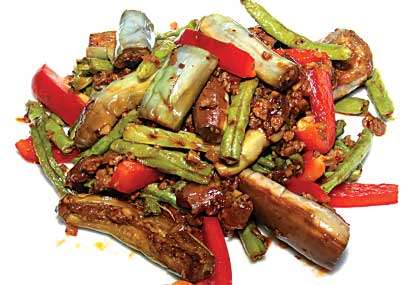
Every dish is a specialty of its own, and you are left wondering what is in what when the dishes are served.

Executive Chef cum Manger of Prima Taste, Ong Chong Gene, a man with a different taste of humour explains that Singaporean cuisine evolved under the influence of China, India and Malay. “Such influence from diverse lands ensured that the Singaporeans learnt to cook an astonishing variety of dishes,” he said.

Believing that food should be served the way it is, Chef Gene encourages no flattery and fancy decorations. “There are no preservatives, MSG or food colouring in the food served here and is so much less oily”
The food is definitely a treat to look at, a definite fest for your eyes. The black pepper crab looks and taste ravishing, but then you might want to cover yourselves up in serviettes before doing so. (Remember the old grub, I said might come in handy?)

And did youknow that the yummiest part of crab is on its shell? But you really have to dig in for that! The Chicken Berwangi: picture this, Wok fried chicken with lemongrass, curry leaves and rice wine with the slightly sweet Crispy Fried Fillet ‘Indonesia’ aka Fish Indonesian, a dish of crispy fish fillet tossed in sweet spicy ginger sauce, and the nice and hot stir fried seafood kangkong, one of my favorites, are must tries at the restaurant.

My personal favourites were the desserts both the bean curd with mango syrup, and kachang was like the cherry on top. One of the very few non-Singaporean dishes served at Prima Taste, the dessert bean curd with mango syrup which was said to be a creation of the “Sri Lankan boys” in the kitchen and the very famous ice kachang with seasonal fruits, found in every street corner of Singapore offered here in a huge bowl with a mountain of it piled up. Yum yum….! Prima Taste also offers outdoor catering, and is open for in-house functions and undertakes anything from a mega party to hosting a private dinner, “from the living to the dead,” as Chef Gene says.

The banquet room at Prima Taste can accommodate up to 150 people while the executive room can house 14 people. The Executive room is up for the niche market and is a highly private room with a bar and LCD TV and all that is needed to host meetings. Now celebrating their 2nd anniversary since its birth in Sri Lanka, Prima Taste offers a special Sunday buffet for just Rs.1200 nett. It offers 18 dishes, appetizers, soups, main dishes and desserts all included. Bring in your kids as they are entitled to free gifts and balloons and a drink too. And if they are under 12 years in age, you’re in luck as the little ones can gulp down everything for half the price!

[by Lakmini Wijemanne]

Imagine this: A beautiful grand old estate bungalow with all the amenities, luxurious spacious bedrooms with feather-soft pillows in four-poster canopy beds surrounded by misty netting, en-suite bathrooms with modern efficiency built to blend-in with the quiet elegance of the building, a vast pool filled with inviting clear blue water glimmering in the warm sunshine, absolute silence, broken only by the melody of gurgling flowing water and chirping of the birds, with luscious trees, and more trees all around you… add also to this the aroma of lovingly cooked delicious food…

Would you believe me if I tell you that all this is available just forty five minutes away from the busy, hub of activity? Well, I thought such a place was impossible to find in such close quarters, until I walked in the gates of Rock Chalet, the newest boutique hotel at the Koratota Estate in Kaduwela.

In a vast 17 ½ acres of rubber estate, nestled among tall straight trees, hidden away from prying eyes, at the end of a tree lined stone-paved drive-way lies the Rock-Chalet. On the Avissawella Road from the Kaduwela Junction, is down Waikkewatta Road is the Koratota Estate, a family owned private, rubber and coconut estate belonging to the A.P. Perera family of Meegoda. Mr. Perera Senior had seven daughters and one son and he divided this estate among his children for each child to get 17.5 acres of land. “Rock Chalet” is the old estate bungalow renovated refurbished to match the “boutique hotel” concept, striving to offer a special experience to its valued visitor.

When we arrived there, the garden was bathed in the early morning glow of the sun, everything looking, extra fresh and inviting after a night of cool rest. We drove along the stone-paved drive way and got down under the portico. The entrance foyer sported a welcoming arrangement of exotic flowers. The wrap-around verandah on three sides of the bungalows has, at intervals, very cosy inviting sitting areas, furnished with comfortable furniture where you can sit and sip your morning tea or a cool drink, enjoying the scenery around you.

Rock Chalet has five beautiful rooms with a special room situated away from the main house. Of the 5 rooms, one room is on the right side of the foyer area, and its side door opens out to the pool side while the picture windows of the room opens on to the beautiful front garden. The other rooms are all on the left of the house, each having it’s own vistas to feast your eyes on.

All rooms are double rooms resplendent with antique furniture carefully chosen to match the character of each room. The rooms are given unique names – Dolamite, Tremaleen, Arora, Pinola and Mimosa.

These are names used to identify different varieties of stones quarried at quarries in the area, for the locality is known for its numerous stone-quarries. The colours for each room also is selected to match the particular colour veins of the stone. The lofty ceilings add a sense of space and airiness to the rooms and since all windows open out to the surrounding greenery, it feels very restive and cool. All the rooms are air conditioned though they still carry a fitted ceiling fan too.

Outside, the garden area is resplendent with green grass and blue water. At one side of the garden, among luscious foliage is a “peella” with a cascading stream of water where one can enjoy a shower before stepping into the pool. On a small hillock, on the rock, is the herbal spa,

complete with steam baths and ayurveda body massages using aromatic oils. A flight of stone steps leads the way from the garden up to the hillock where the spa is situated. A soothing music of flowing water adds to relaxing atmosphere here which is a balm to the mind as well as the body.

Away from the main house, almost hidden, is the separate Chalet which I mentioned earlier. A wood-plank bridge has to be crossed to reach the room. Which has its own little story. It goes like this!
Many years ago (about 75 years) the outhouse which was in this location hidden among trees had served as a safe hide out to an Englishman by the name of Braise Girdle, wanted by the law, to be deported back to his country for his part in the subversive activities conducted against the state. He was sent from England to oversee the plantation industry here.

Having felt a sympathy, towards the plantation worker, he had taken up the cause of the worker against the state, a warrant had been issued to catch him and deport him back to England. A few of his friends had kept him hidden in this outhouse in the estate until it was safe to release him. Since this room lies away and over the bridge, it has its own charm, with its own little private sit-out to enjoy the scenery.

At Rock Chalet, food is served on an a-la-carte menu and a variety of cuisine is available to placate your palate. The chefs are versatile and would prepare food to your requirements on request. For guests who enjoy barbeque, a separate area is setout with a built-in grill and a matching sit-out area.

Designed to match the environment Rock Chalet is very close to its owners – Mrs. Edirisinghe’s heart. Since this is her family’s estate bungalow remodeled to a boutique hotel, she had very specific ideas about its restoration and remodeling, and today, she’s quietly proud, that her project is completed to her heart’s content. Rock Chalet can be viewed and reserved on www.rockchalet.net and for reservations you can telephone on 2415166.
E mail: info@rockchalet.net

[by Shehara Rajapakshe]

Vidyani is the President of the Women’s Chamber of Commerce, a member of Zonta II of Colombo and the lady that created a different outlook to Ayurveda. Her father is the well known Siddhalepa brain child, Dr.Victor Hettigoda. A gentleman who strived at an era when Ayurveda was neglected due to western practices and brought forth revenue and recognition to the country by introducing the transformation of Ayurvedic treatment. The children too followed in the footsteps of the father, not merely by running the family business but by being more humane to the needs of the individuals and following the principle of leadership to work hard to achieve success.

Simplicity in lifestyle

Vidyani was educated at Girls High School Mount Lavinia and thereafter, left to complete her higher studies in London. She left as a student but returned as an adult eagerly ready to take over responsibilities. She said that the guidance, knowledge and support given by her parents are truly the best anyone could yearn for, as she was asked to work under a leader to one day become a leader herself. Married to her friend Nalaka from University, the two of them have a son, Kasun who loves them dearly.

Returned with knowledge and compassion

Most of us like to bring in whatever good that we could gather when we go to a different country. As such, Vidyani too had her part of the plan accomplished as well. She said, “when I completed my education my father wanted me to work under someone and feel part of the work force, for the simple reason that he believed that it matured and moulded the personality of any individual. That is exactly what I did, I went through the general pay roll in UK after completing my Business Degree and Computer Software and learnt to deal with situations faced by the public. I thank my father for all his guidance and that is the reason I returned and have become part of the family business as I truly believe in his methods of action. Although my father started a treatment centre at the Mount Lavinia hospital, I wanted to make it more up market and interesting for different groups ranging from middle to upper middle class.

I travelled around the world and gathered many information and knowledge by attending various programmes to take a general treatment centre and convert it in to a spa, and yet I continue to learn day in day out, as it is said that we learn something new until the day we leave this world.”

Her role in the family business

The Siddhalepa family has evolved from the balm to many other different treatments, soaps, oils etc. They are all time tested ayurvedic holistic treatments for the entire body from head to toe and the family of three children, Vidyani, her brother and sister support their father, the Chairman of the company. According to Vidyani, her father has made each one of them self sufficient in every sphere of the business, so that each one could cope the other one’s work, especially if one person is away on business overseas.

Presently, there are two spas, one at Mount Lavinia and the other at Wijerama Mawatha, Colombo 7, and the famous Ayurvedic Hotel in Wadduwa, apart from the variety of ayurvedic products ranging from soaps, balms, head oils, massage oils, shampoo, shower gel etc.

A working director cum mother, wife and daughter

We all know that as women, we are really great at multi tasking and Vidyani too is a lady who balances, career, family, business, leisure and time for herself very well. She is up very early in the morning, attending to the needs of the household, then switch on to work, not merely at one place but to the factory, hotel, spa etc, and see to it that everything is taken care of well. “Actually Nalaka, is very supportive of all my work and even club activities. Both of us somehow manage to juggle family life and work as a team.

Having worked under a boss, made me see a very different side, as I know what it feels like to be in the place of my employee, when I returned to Sri Lanka about twelve years ago, I must say I was too gullible with the attitude of the people in our own country as I was away for a long period of time, therefore, I had to undergo many difficulties, but with time, I have matured and am in a position to understand the needs of people and how to deal with different personalities. Handling people is no easy task, as you have to be sharp every step of the way, you could be good but at the same time well disciplined to know how and when certain things are carried out. The past eight years I have changed a lot from what I was to what I am now and looking back I feel that all that happened was for a very clear reason, which is maturity.”

Why opt for Ayurveda?

“Having got a Business degree, I chose ayurveda and joined the family business, as I truly believed in ayurveda and how much of a difference it could bring to this whole world. We have been fortunate to open spas abroad in Germany and Czech Republic and keep on expanding our foreign market, so that we could earn more revenue for our beautiful motherland. I think as Sri Lankans, we should all put away all our differences and think as an united Sri Lanka and extend support in whatever possible way to promote our nation. I want to take the concept of Ayurveda, as I said before around the globe and make people understand how easy the cycle would be if natural extracts are used on the body, instead of all the synthetic products that the western world has brought forth. Actually, now, even the west has accepted that ayurveda is a more healthier way of treating ones’ self than the artificial products. People trust our products as we have a very good standing in the local and international market. I consider that both family and my career are equally important and I share my time to take decisions, with my family members in every sphere of the business, as I said before. This indeed is a great challenge for me and sometimes tiring and believe me there are days that I need a break, at which time my family supports me very lovingly, my dear son Kasun and loving husband Nalaka,” replied Vidyani.

Family Life

Although Vidyani has more than one area to concentrate when it comes to work, her role in the family is of utmost importance. They make it a point to spend quality family time together by doing various things together on a Sunday, such as picnics, lunches etc. Something she looks forward to every Sunday is the time playing badminton with her family. Apart from her immediate family her brother Asoka and sister Lankani too are very close. Most of the time you will see the two sisters and brother together especially if it is a charity show or at an event that supports someone, the three of them get together and attend. Even during weekends, they spend a little time with each other as they all live close upon to each other and the kids too enjoy the time. Nalaka, her husband is a Telecommunications Engineer by Profession and working for a US company as the Head of the Sri Lanka division. Kasun is thirteen and schooling at St.Thomas’ College, Mount Lavina.

Leisure and Hobbies

Vidyani enjoys travelling around the world and especially in Sri Lanka as well, as she was away during the time she was young, most places could not be visited. She said that after the arrival of peace in our land, she keeps on traveling to the places she had never been able to see due to the civil war. Her main interest in any country is only if there is a rich heritage or steeped history, as she likes to explore and learn everyday. Apart from this, she occupies herself doing various other activities in her spare time. She sets goals for her everyday and her day starts with a game of Sudoku, as she believes that it energizers her brain for the whole day ahead and of course the physical exercises for the body to keep fit and trim. As she spent many years in England, she enjoys travelling to Europe. As a woman there is one word that we all love and enjoy, “shopping”, which brings on a huge smile even on Vidyani’s face. Since most of her life was spent in the European territory she enjoys her shopping sprees at them too!

Clubs and societies

Vidyani was recently elected as the President of Women’s Chamber of Commerce (WCIC) and is also a member of the Zonta Club II of Colombo. Her role as the President of WCIC, involves a lot of time as there are many projects that she has planned for the next year, the foremost among them is to empower women and strengthen their capabilities by providing them the proper knowledge and know-how and support them in the best possible way. Being a member of Zonta Club II, once again is to empower women in their endeavours and the two clubs go hand in hand with the amount of work that has to be completed.

With Vidyani’s busy schedule, we didn’t want to take up any more of her time as even after this interview she has to rush to another meeting, but it is always a pleasure to speak to a person as down to earth as Vidyani. She is very simple in her ways, would like to help anyone who would ask her for support and would remain calm and charming. We wish Vidyani all the best in her new position as President of the WCIC and hope that she could further all her endeavours of supporting other females to the best of her ability!